

What is SMC?
SMC (Sheet Molding Compound) molding is a thermoset composite compression molding process widely used for the high-volume production of high-strength composite components.
It is widely used across industries such as wind energy, rail transportation, electrical equipment, and automotive lightweighting, where structural performance, dimensional consistency, and efficient large-scale manufacturing are important.
What Can Shuangyi Manufacture Using SMC?
Engineering and Manufacturing Capabilities
Engineering Expertise
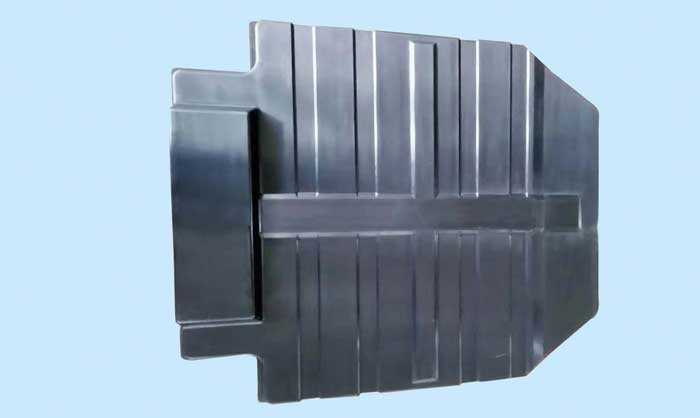
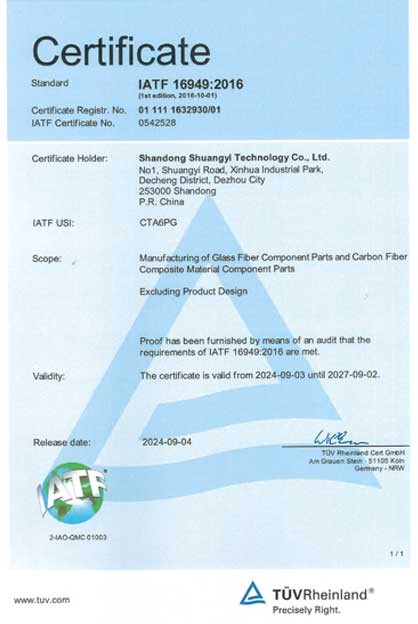
Shuangyi Technology has a team of experienced engineers with extensive project implementation and product development experience. Our engineers have years of experience working on design and engineering projects for major off-highway vehicle manufacturers and industrial groups, including Caterpillar, XCMG, and PACCAR. For domestic customers, we have also designed and developed SMC battery enclosure upper covers with a minimum wall thickness of just 2 mm, demonstrating our expertise in lightweight composite design and engineering. Our quality management system is certified to IATF 16949.
Manufacturing Capabilities
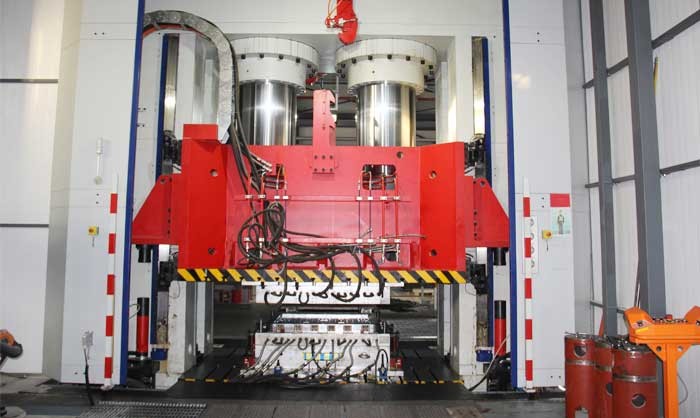
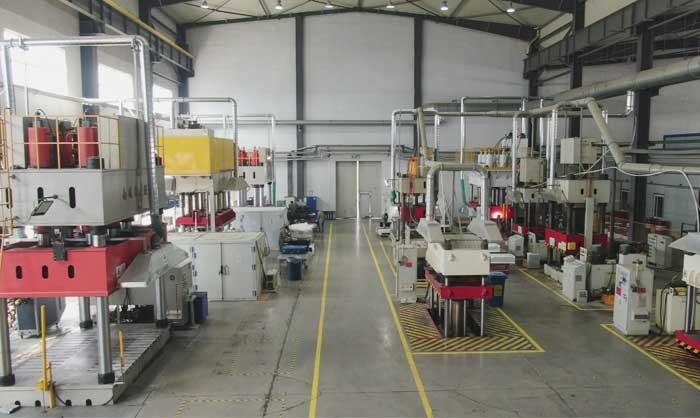
Our manufacturing facilities are equipped with multiple hydraulic presses of different models and tonnages, as well as laser cutting machines and dedicated equipment for product finishing and dimensional calibration. This equipment enables efficient compression molding, precise post-processing, and consistent product quality, supporting reliable production from product development through to mass manufacturing.
Representative SMC Products?
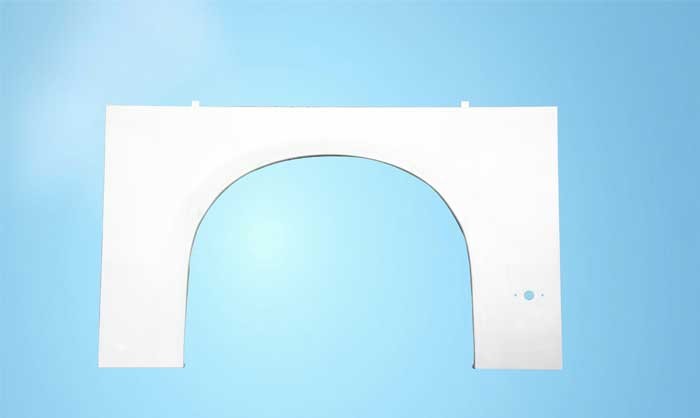
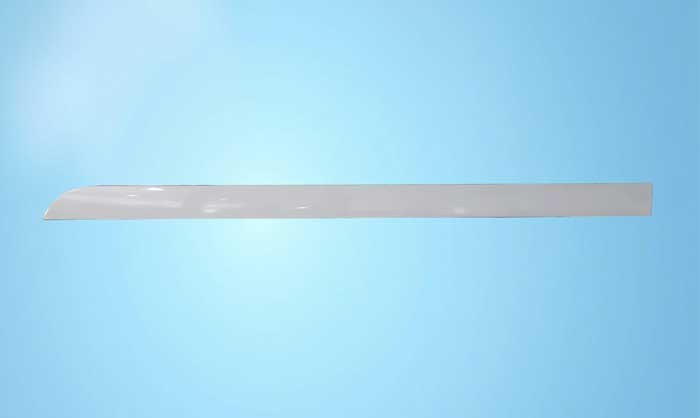
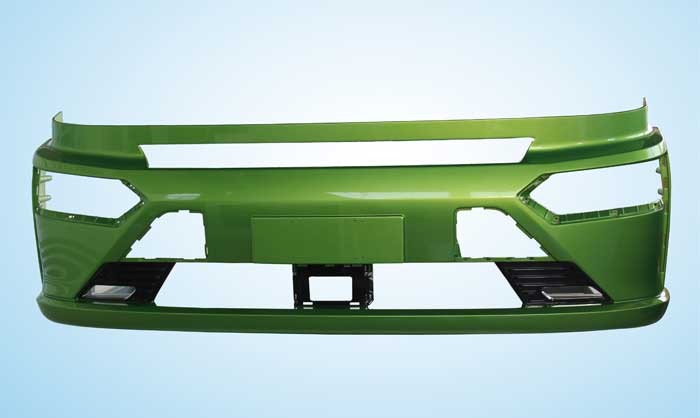
Representative SMC products include front panels for BYD vehicles, wheel arch trim components for Yutong buses, and upper covers for new energy vehicle battery enclosures.
SMC Manufacturing Capabilities?
SMC Engineering and Digital Manufacturing Capabilities
Shuangyi Technology has a dedicated engineering team that works closely with customers to understand their requirements, discuss technical details, and develop product designs and engineering drawings tailored to their specifications.
We operate a dedicated digital manufacturing workshop for SMC products, equipped with multiple automated hydraulic presses to support efficient and consistent production.
Our Manufacturing Execution System (MES) provides real-time visibility into production progress, product quality, manufacturing status, and raw material batch traceability. This enables effective production monitoring, quality control, and traceability throughout the manufacturing process.
When Is SMC Suitable?
SMC is widely used to manufacture lightweight automotive components, interior and exterior trim parts, and upper covers for new energy vehicle battery enclosures.
These composite components help reduce overall vehicle weight, which can contribute to improved driving range and lower energy consumption. By reducing energy use, lightweight composite solutions can also help lower vehicle-related carbon emissions.
SMC Applications
1. Requirement Analysis and Engineering Design
Our engineering team works closely with you to understand your actual application requirements and translate your initial concept and specifications into a detailed engineering design. Throughout the design process, we maintain close communication with you to clarify technical details, evaluate load conditions, and determine how the required functions will be achieved.
2. Finite Element Analysis and Design Optimization
We use professional finite element analysis (FEA) tools to evaluate structural performance and assess whether the proposed design meets the project requirements. Based on the analysis results and our practical engineering experience, we provide optimization recommendations to improve the design's feasibility, reliability, and manufacturability.
3. First-Article Prototyping and Validation
The first article is not simply a visual or cosmetic sample. It is used to comprehensively validate the engineering concepts and design assumptions established during the development stage. Your review and approval are essential at this stage. Based on the prototype results and your feedback, both parties work together to refine the design and implement necessary improvements.
This process is fully customized to your product requirements, with adjustments made as needed to achieve the intended performance and functionality.
4. Small-Batch Trial Production and Evaluation
After first-article validation and design refinement, we proceed to small-batch trial production. This stage allows us to evaluate product performance, manufacturing feasibility, process stability, and consistency before committing to large-scale production.
5. Mass Production
Once the product design and manufacturing process have been validated and approved, the project moves into mass production under established quality management procedures to support consistent product quality and reliable delivery.
Related Products
https://www.shuangyitec.com/?list_18/132.html
https://www.shuangyitec.com/?list_18/59.html
https://www.shuangyitec.com/?list_18/139.html
Choosing the Right Composite Manufacturing Process
The appropriate composite manufacturing process depends on component geometry, size, structural requirements, production volume, material system, tooling requirements, and target cost. Shuangyi Technology can evaluate these factors and recommend a suitable manufacturing process during the engineering development stage.
Quality Assurance&Testing
Shuangyi Technology has dedicated quality assurance and inspection teams in addition to its professional engineering, R&D, and manufacturing teams. Our quality control process begins with the inspection of incoming raw materials, with key material properties and parameters, including glass transition temperature (Tg), verified according to applicable specifications and quality requirements.
For tooling and composite products, we use professional inspection and measurement equipment, including laser trackers, to accurately verify mold surfaces, dimensional accuracy, and critical geometric features.
Our quality organization includes approximately 100 dedicated quality professionals, with several team members holding professional APQP4Wind qualifications. Our quality engineers are experienced in applying internationally recognized quality management methodologies, including APQP, PDCA, and 8D problem-solving.
By applying structured quality processes and industry-recognized quality management methods throughout the product lifecycle, Shuangyi Technology maintains a consistent quality language and technical communication framework with global customers, supporting efficient collaboration from product development through manufacturing and final inspection.
Talk to Our Engineers
Our professional engineers have extensive experience managing composite development projects and leading engineering teams. If you have a custom composite design, engineering, or product development project, our experienced engineering team is ready to work with you to understand your requirements and develop the right solution.
Contact our engineering team:
Tec@shuangyitec.com