

What is P-DCPD?
P-DCPD (Polydicyclopentadiene) molding is a reaction injection molding (RIM) process used to manufacture high-performance thermosetting polymer components. Two low-viscosity reactive liquid components are metered and mixed before being injected into a closed mold, where they undergo polymerization to form the finished part. The process is suitable for producing large, complex components with good impact resistance and design flexibility.
What Can Shuangyi Manufacture Using P-DCPD?
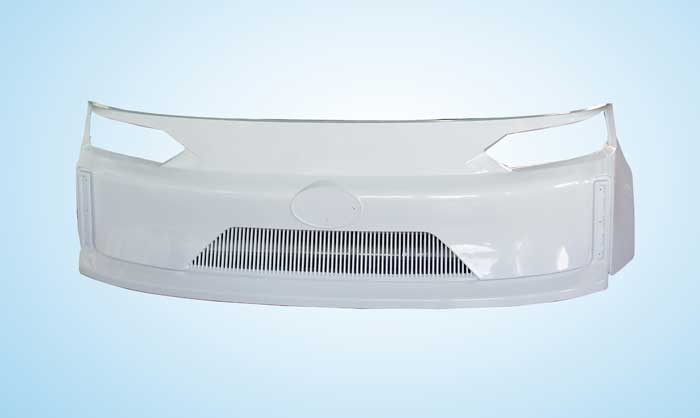
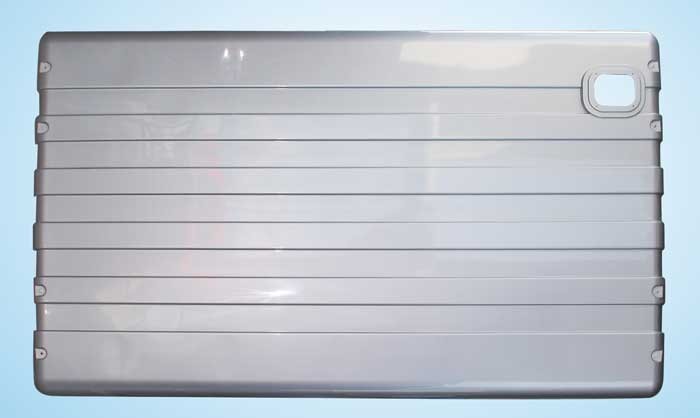
Shuangyi Technology operates two P-DCPD molding systems with different specifications, including a high-capacity system designed for manufacturing large-format components.
Using this equipment, Shuangyi has successfully manufactured a one-piece P-DCPD battery enclosure upper cover weighing approximately 63.5 kg for a new energy vehicle application. This demonstrates our capability to develop and manufacture large, complex P-DCPD components.
Representative P-DCPD Products
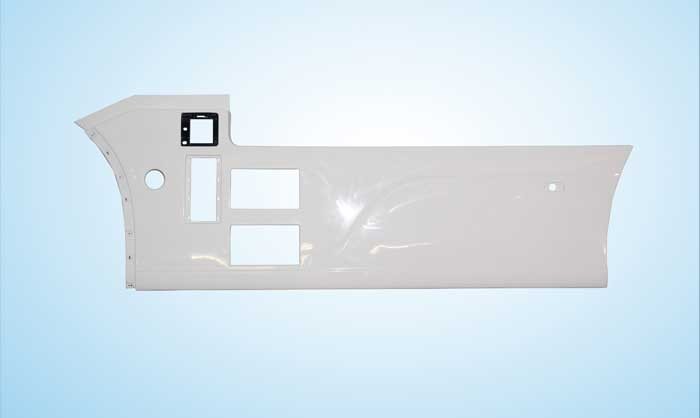
Representative products include battery enclosure upper covers and bus front panels for BYD, as well as interior and exterior components for Yutong buses.
P-DCPD Key Technical Advantages
Large-Format Component Manufacturing
P-DCPD molding supports the production of large, complex components with integrated structures, making it suitable for applications such as automotive front panels, battery enclosure covers, and heavy-duty vehicle exterior components.
Impact Resistance
P-DCPD materials can provide good impact resistance, making them suitable for components exposed to mechanical impact and demanding operating conditions. Actual performance depends on material formulation, component design, and testing requirements.
Design Flexibility
The process allows complex geometries and integrated component designs, helping reduce the need for multiple separately manufactured parts in suitable applications.
Automated Molding Process
Controlled material mixing, injection, and polymerization support repeatable production conditions and help reduce manual process variation.
P-DCPD Manufacturing Capabilities
Engineering Capabilities
Shuangyi Technology has a dedicated team of experienced engineers and designers who work closely with customers to understand their requirements and translate them into detailed engineering drawings. Using finite element analysis (FEA), our team evaluates structural performance and load-bearing characteristics. Drawing on practical manufacturing experience, we recommend design optimizations and improvements, which are then validated and refined through prototype production and testing.
Manufacturing Capabilities
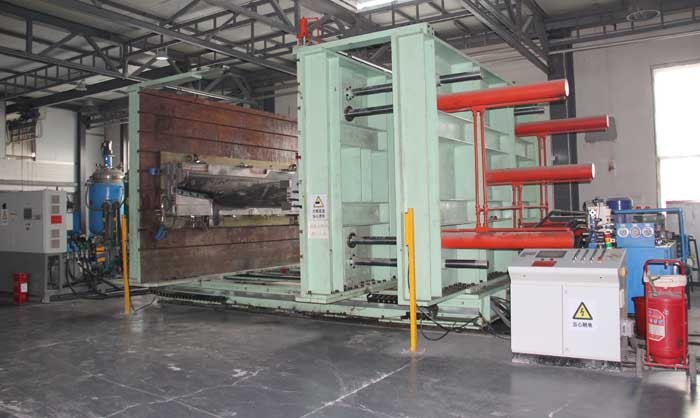
Shuangyi Technology operates two P-DCPD molding systems of different specifications, enabling us to mold components in a range of sizes to meet diverse customer requirements.
P-DCPD Manufacturing Capacity
Shuangyi Technology operates two P-DCPD molding systems with different specifications to support customized component manufacturing across a range of sizes.
Our current stated annual production capacity for P-DCPD components is approximately 40,000 units, subject to product specifications, production scheduling, and project requirements.
We support the complete development process, from engineering design and tooling development to first-article validation, small-batch trials, and mass production.
When Is P-DCPD Suitable?
P-DCPD molding is particularly well suited for manufacturing large, complex, impact-resistant components. Its applications are concentrated in automotive, commercial vehicle, and heavy equipment industries, where durability, design flexibility, and part integration are key requirements.
P-DCPD is used for large exterior components and can be an alternative to conventional fiberglass-reinforced plastics (FRP) and sheet molding compound (SMC), depending on the application and performance requirements.
Typical applications include:
Heavy-duty truck hoods: A representative application requiring a combination of mechanical strength, heat resistance, impact resistance, and a high-quality surface finish.
Air deflectors and fairings
Mudguards
Exterior body panels
P-DCPD can be used to manufacture components such as bumpers and side panels, offering design flexibility and impact resistance. Environmental compliance, including requirements under regulations such as RoHS and REACH, depends on the material formulation and the finished product and must be verified for each application.
P-DCPD may be used to manufacture selected structural and housing components for power steering systems, subject to the relevant mechanical, thermal, and durability requirements.
P-DCPD enables the integrated molding of large, complex components, including battery enclosure upper covers weighing more than 60 kg. This capability makes it a potential solution for new energy vehicle applications requiring large-format parts, structural integration, and impact resistance.
From Concept to Mass Production
1. Requirement Analysis and Engineering Design
Our engineering team works closely with you to understand your actual application requirements and translate your initial concept and specifications into a detailed engineering design. Throughout the design process, we maintain close communication with you to clarify technical details, evaluate load conditions, and determine how the required functions will be achieved.
2. Finite Element Analysis and Design Optimization
We use professional finite element analysis (FEA) tools to evaluate structural performance and assess whether the proposed design meets the project requirements. Based on the analysis results and our practical engineering experience, we provide optimization recommendations to improve the design's feasibility, reliability, and manufacturability.
3. First-Article Prototyping and Validation
The first article is not simply a visual or cosmetic sample. It is used to comprehensively validate the engineering concepts and design assumptions established during the development stage. Your review and approval are essential at this stage. Based on the prototype results and your feedback, both parties work together to refine the design and implement necessary improvements.
This process is fully customized to your product requirements, with adjustments made as needed to achieve the intended performance and functionality.
4. Small-Batch Trial Production and Evaluation
After first-article validation and design refinement, we proceed to small-batch trial production. This stage allows us to evaluate product performance, manufacturing feasibility, process stability, and consistency before committing to large-scale production.
5. Mass Production
Once the product design and manufacturing process have been validated and approved, the project moves into mass production under established quality management procedures to support consistent product quality and reliable delivery.
Q1. What products can be manufactured using P-DCPD?
Shuangyi manufactures customized P-DCPD components, including large automotive front panels, lightweight battery enclosure upper covers, and interior and exterior components for commercial vehicles. Our manufacturing experience includes large, one-piece molded battery enclosure covers weighing over 60 kg, demonstrating our capability to produce large and complex components for automotive applications.
Q2. What P-DCPD molding equipment does Shuangyi operate?
Shuangyi operates two P-DCPD molding systems with different specifications, including one high-capacity system designed for large components. Using this equipment, we have successfully manufactured a one-piece molded battery enclosure upper cover weighing approximately 63.5 kg. This demonstrates our capability to manufacture large-format P-DCPD components for new energy vehicle applications.
Q3. How long does the P-DCPD manufacturing process take?
At Shuangyi, typical molding cycle times for certain P-DCPD components range from approximately 10 to 20 minutes. Actual cycle times depend on component size, geometry, wall thickness, material requirements, and process parameters.
Q4. What engineering and prototyping services does Shuangyi provide for P-DCPD components?
Shuangyi provides customized engineering and prototyping services for P-DCPD components, starting from customer concepts, specifications, or technical drawings. Our engineering team evaluates product structures, load conditions, and functional requirements, and uses finite element analysis (FEA) to support design optimization. We then develop and manufacture the required tooling, produce first-article prototypes, and conduct validation based on agreed project requirements before proceeding to small-batch trials and mass production.
Q5. Does Shuangyi support prototype development and mass production?
Yes. Shuangyi supports the full product development process, from initial prototype development and first-article validation to small-batch trials and mass production. Our engineering team works closely with customers to refine product designs, validate tooling and manufacturing processes, and establish stable production conditions before volume production.
Q6. What quality management methods are used in P-dcpd production?
Our quality teams apply APQP, PDCA and 8D methodologies, together with material inspection and product quality verification.
Q7.What materials are used in P-DCPD composite manufacturing?
The core material used in the P-DCPD process is polydicyclopentadiene (PDCPD), a thermosetting engineering plastic produced via reaction injection molding (RIM).
Q8.Can P-DCPD battery enclosure covers be customized for different EV models?
Yes. Battery enclosures produced via the P-DCPD process are customized to customer requirements. Customers provide detailed parameter specifications and may also supply drawings for design. Our engineers discuss product performance parameters and the implementation approach in detail with the customer, and then carry out first-article trial production.
This applies not only to P-DCPD battery enclosures but also to P-DCPD interior and exterior components for passenger vehicles, engine hood housings for construction vehicles, and other products—all of which are custom-developed, designed, and manufactured to customer requirements.
Q9. How does Shuangyi verify the quality and performance of P-DCPD components?
P-DCPD components undergo inspection and testing according to customer specifications and applicable automotive requirements. Depending on project requirements, verification may include mechanical property testing, flame-retardancy testing, first-article inspection (FAI), and batch sampling.
Inspection reports and traceability records are maintained to support product quality verification and production control.
Q10. What is Shuangyi's annual P-DCPD production capacity?
Shuangyi has an annual production capacity of approximately 40,000 P-DCPD components, depending on product specifications, component complexity, molding cycle times, and production schedules. Our production facilities support both customized component development and series production for automotive and industrial applications.
Related Products
https://www.shuangyitec.com/?list_18/60.html
https://www.shuangyitec.com/?list_18/134.html
https://www.shuangyitec.com/?list_18/136.html
Choosing the Right Composite Manufacturing Process
The appropriate composite manufacturing process depends on component geometry, size, structural requirements, production volume, material system, tooling requirements, and target cost. Shuangyi Technology can evaluate these factors and recommend a suitable manufacturing process during the engineering development stage.
Quality Assurance&Testing
Shuangyi Technology has dedicated quality assurance and inspection teams in addition to its professional engineering, R&D, and manufacturing teams. Our quality control process begins with the inspection of incoming raw materials, with key material properties and parameters, including glass transition temperature (Tg), verified according to applicable specifications and quality requirements.
For tooling and composite products, we use professional inspection and measurement equipment, including laser trackers, to accurately verify mold surfaces, dimensional accuracy, and critical geometric features.
Our quality organization includes approximately 100 dedicated quality professionals, with several team members holding professional APQP4Wind qualifications. Our quality engineers are experienced in applying internationally recognized quality management methodologies, including APQP, PDCA, and 8D problem-solving.
By applying structured quality processes and industry-recognized quality management methods throughout the product lifecycle, Shuangyi Technology maintains a consistent quality language and technical communication framework with global customers, supporting efficient collaboration from product development through manufacturing and final inspection.
Talk to Our Engineers
Our professional engineers have extensive experience managing composite development projects and leading engineering teams. If you have a custom composite design, engineering, or product development project, our experienced engineering team is ready to work with you to understand your requirements and develop the right solution.
Contact our engineering team:
export@shuangyitec.com