

What is LFI?
LFI (Long Fiber Injection) is a polyurethane-based composite manufacturing process that combines reinforcing glass fibers with a reactive polyurethane (PU/PUR) resin system to produce lightweight structural and semi-structural components.
In the LFI process used by Shuangyi Technology, polyurethane materials and reinforcing glass fibers are mixed using dedicated production equipment. The mixed material is then formed in a mould through a controlled compression and curing process.
At Shuangyi Technology, LFI is used to manufacture customized vehicle components, including construction machinery roof panels and vehicle access doors. Our engineering team evaluates each project according to its structural requirements, weight targets, functional specifications and production needs.
What Can Shuangyi Manufacture Using LFI?
Shuangyi Technology has dedicated production equipment and experienced engineering and manufacturing teams for this composite forming process. We have manufactured customized roof panels for Wirtgen construction machinery, as well as vehicle access doors and other structural components for different customers.
Our engineering team works closely with customers to develop components according to specific application requirements, including product geometry, structural performance, weight targets and installation conditions. From initial design and tooling development to first-article validation and serial production, we provide integrated manufacturing support for customized composite components.
Shuangyi Technology's LFI manufacturing process combines reinforcing glass fibers with a polyurethane (PU/PUR) resin system using dedicated production equipment. After the materials are mixed, the composite material is placed into the mould and formed through a controlled compression and curing process.
The manufacturing process is managed according to the component design, material formulation and mould requirements. Process parameters are evaluated and optimized during product development to achieve the required component geometry, structural characteristics and production consistency.
This process supports the development of customized lightweight composite components, including construction machinery roof panels and vehicle access doors.
Shuangyi Technology has manufactured customized LFI roof panels for Wirtgen construction machinery. These components are developed using a polyurethane-based, glass-fiber-reinforced composite system and are designed according to the customer's requirements for structural performance, component weight, dimensional accuracy and functional integration.
Our engineering team supports the project from product design evaluation and tooling development to first-article validation and serial production. The manufacturing solution is tailored to the component's geometry, operating environment and production requirements.
This project demonstrates Shuangyi Technology's ability to develop and manufacture customized LFI composite components for construction machinery applications.
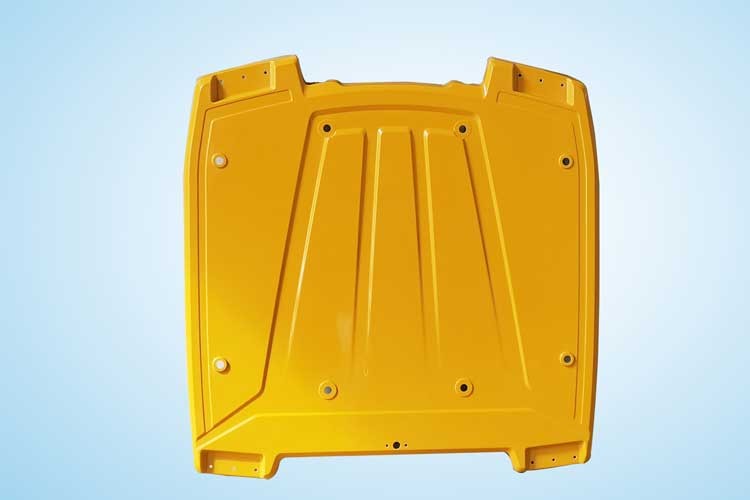
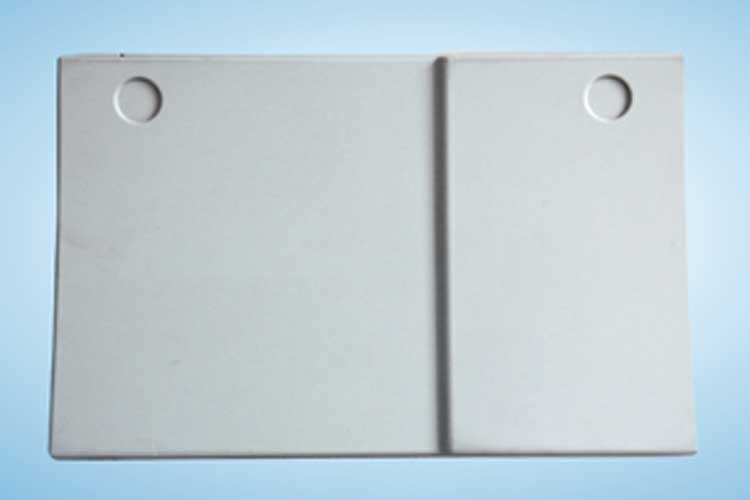
LFI offers a flexible manufacturing solution for lightweight, fiber-reinforced composite components. By combining glass-fiber reinforcement with a polyurethane resin system, the process allows engineers to develop customized parts with application-specific structural and functional characteristics.
Depending on the component design, mould configuration and material formulation, LFI components can incorporate integrated ribs, mounting features and varying structural thicknesses. These design possibilities can help simplify component construction and reduce the need for multiple individual parts.
The suitability of LFI for each application is evaluated according to structural performance, component weight, surface requirements, tooling considerations and expected production volume. Actual product properties are verified against customer specifications and relevant testing requirements.
LFI Manufacturing Capabilities
Shuangyi Technology provides customized LFI component manufacturing services supported by dedicated production equipment and experienced engineering and manufacturing teams.
Our manufacturing capabilities include product design development, material and process evaluation, tooling adaptation, process parameter optimization, first-article production and post-processing. Each project is evaluated according to the customer's drawings, structural requirements, functional specifications and production targets.
We work closely with customers throughout the development process to ensure that the selected manufacturing approach is suitable for the intended application. Our production team supports first-article trials, low-volume pilot production and subsequent serial manufacturing, with quality inspection and process control implemented throughout the production stages.
Representative LFI Products
Shuangyi Technology has manufactured customized roof panels for Wirtgen construction machinery using its LFI production equipment. The roof panels are designed to meet the customer's requirements for component structure, weight and functional performance.
Compared with alternative composite manufacturing solutions used for similar applications, the selected process can provide opportunities for component lightweighting and manufacturing efficiency. The actual weight reduction depends on the original component design, material selection and performance requirements.
In addition to construction machinery roof panels, Shuangyi has manufactured customized vehicle access doors and other vehicle components for different customers.
This manufacturing process is used by Shuangyi Technology for customized vehicle components, particularly construction machinery roof panels and passenger vehicle access doors. These components are developed to meet application-specific requirements for lightweight construction, structural performance, dimensional accuracy and functional integration.
Depending on the component design, material system and production requirements, the technology may also be evaluated for other automotive and industrial applications. Our engineering team assesses each project individually to determine whether the process is suitable for the intended component and production volume.
When Is LFI Suitable?
LFI is suitable for customized lightweight composite components that require fiber reinforcement, structural integration and polyurethane-based material properties.
Shuangyi Technology has manufacturing experience in LFI construction machinery roof panels for Wirtgen and customized vehicle access doors for other customers. These components are developed according to specific requirements for component structure, weight, dimensional accuracy and functional performance.
The process may also be evaluated for other automotive, commercial vehicle and industrial applications. Our engineering team assesses component geometry, material compatibility, structural requirements, tooling considerations and production volume to determine whether LFI is the appropriate manufacturing solution.
From Concept to Mass Production
Our engineering development process begins with a detailed understanding of the customer's application requirements. We work closely with customers to review product drawings, functional specifications, load conditions, installation requirements and expected performance.
Based on this information, our engineering team develops or optimizes the product design and uses finite element analysis (FEA) where appropriate to evaluate structural performance. Combining simulation results with practical manufacturing experience, we provide engineering recommendations to improve product design, structural reliability and manufacturing feasibility.
After the design is reviewed and approved, we proceed with tooling development and first-article production. The first article is not evaluated solely on appearance. It is used to verify the design assumptions, structural requirements, functional characteristics and manufacturing feasibility. Customers participate in the review and approval process, and necessary improvements are implemented based on the validation results.
Once the first article has been approved, we conduct low-volume pilot production to evaluate process stability, product consistency and manufacturing feasibility. Following successful evaluation and customer approval, the project proceeds to mass production under established quality control procedures.
Q1. What products can be manufactured using LFI?
LFI can be used to manufacture a range of lightweight, fiber-reinforced vehicle components, depending on the material system and component design. Shuangyi Technology has experience manufacturing construction machinery roof panels, passenger vehicle access doors and other customized vehicle components. The suitability of each product is evaluated according to its structural requirements, geometry, functional specifications and production volume.
Q2. What LFI manufacturing equipment does Shuangyi have?
Shuangyi Technology operates one dedicated LFI production unit equipped with a compression press. The equipment is used to manufacture polyurethane-based, glass-fiber-reinforced composite components. It supports customized product development, first-article trials, low-volume pilot production and serial manufacturing according to component design and production requirements.
Q3. What materials are used in LFI manufacturing?
Shuangyi Technology's LFI manufacturing process uses a polyurethane (PU/PUR) resin system combined with reinforcing glass fibers. These materials are mixed using dedicated LFI production equipment before the composite material is formed in a mould through a controlled compression and curing process.
Q4. How long does the LFI manufacturing cycle take?
The production cycle depends on the component geometry, material system, mould design and processing parameters. Different components may require different forming times. During project evaluation, Shuangyi Technology assesses the manufacturing requirements and determines suitable process parameters and production cycle targets.
Q5. Does Shuangyi support customized LFI component development?
Yes. Shuangyi Technology provides customized component development based on customer drawings, technical specifications and application requirements. Our engineering team evaluates the product structure, functional requirements and manufacturing feasibility, and works with customers on design optimization and tooling development before first-article production.
Q6. Does Shuangyi support prototype development and mass production?
Yes. We support the complete development process, including customized design, tooling development, first-article trials, low-volume pilot production and mass manufacturing. Product performance and manufacturing feasibility are evaluated during the trial stages, and necessary improvements are implemented following customer review and approval.
Q7. What quality control methods are used in LFI production?
Shuangyi Technology applies quality control procedures throughout the manufacturing process, including incoming material inspection, process monitoring, first-article inspection and batch sampling. Product inspection and testing are performed according to customer specifications and applicable technical requirements. Relevant quality records and inspection reports support product verification and traceability.
Q8. What are the main applications of LFI components?
Shuangyi Technology currently applies this manufacturing process to customized vehicle components, including construction machinery roof panels and passenger vehicle access doors. Other potential applications are evaluated according to component geometry, structural requirements, material compatibility and production volume.
Q9. How does Shuangyi validate the performance of LFI components?
Product validation is carried out according to customer specifications and the intended application. Depending on the component requirements, evaluation may include dimensional inspection, structural verification, mechanical testing and other specified performance tests. First-article validation and customer approval are important steps before pilot and mass production.
Q10. How does Shuangyi develop custom tooling for LFI components?
Our engineering team reviews customer drawings, product specifications and functional requirements before developing the tooling design. We evaluate component geometry, mould structure and manufacturing feasibility, and communicate key technical details with the customer before tooling fabrication. After tooling completion, first-article trials are conducted to verify the design and support subsequent optimization.
Related LFI Composite Components
https://www.shuangyitec.com/?list_18/57.html
Choosing the Right Composite Manufacturing Process
The appropriate composite manufacturing process depends on component geometry, size, structural requirements, production volume, material system, tooling requirements, and target cost. Shuangyi Technology can evaluate these factors and recommend a suitable manufacturing process during the engineering development stage.
Quality Assurance&Testing
Shuangyi Technology operates a dedicated quality inspection organization supporting the entire composite component manufacturing process, from incoming material inspection to final product verification.
Our quality control procedures include incoming material inspection, verification of key material properties such as glass transition temperature (Tg), tooling dimensional inspection and finished-part testing. We use professional measurement equipment, including laser trackers, to inspect mould surfaces and verify critical dimensional features.
Our quality organization consists of approximately 100 dedicated quality professionals, with several team members holding APQP4Wind qualifications. Our quality engineers apply structured quality management methodologies, including APQP, PDCA and 8D problem-solving, to support product development, process control and continuous improvement.
For customized automotive and industrial components, inspection and testing requirements are defined according to customer specifications and applicable industry standards. Quality records and inspection reports support product verification and manufacturing traceability.
Talk to Our Engineers
Our professional engineers have extensive experience managing composite development projects and leading engineering teams. If you have a custom composite design, engineering, or product development project, our experienced engineering team is ready to work with you to understand your requirements and develop the right solution.
Contact our engineering team:
export@shuangyitec.com