

What is LRTM?
LRTM (Light Resin Transfer Molding) is a closed-mold liquid composite manufacturing process that uses controlled resin injection, typically assisted by vacuum, to impregnate fiber reinforcement within a matched mold.
Compared with conventional open-mold hand lay-up, LRTM provides better control over resin distribution, surface quality, and part consistency. It is particularly suitable for manufacturing customized composite components that require a good surface finish, lightweight construction, and repeatable production quality.
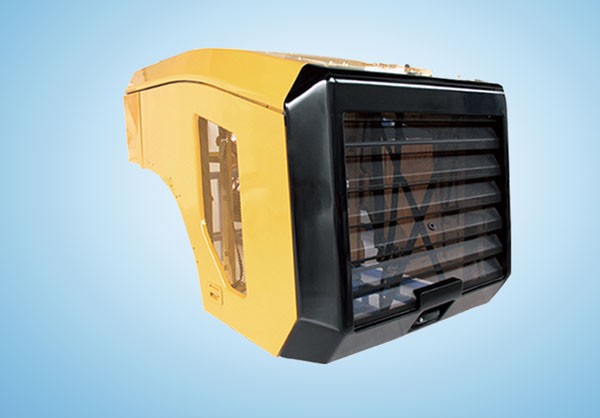
The process is commonly used for composite components such as wind turbine nacelle cover parts, marine structures, vehicle components, and other molded composite shells.
What Can Shuangyi Manufacture Using LRTM?
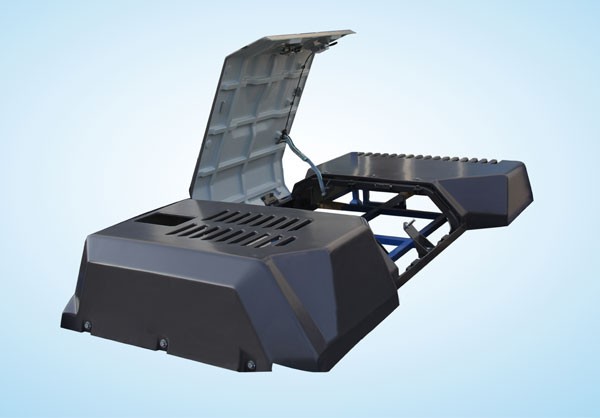
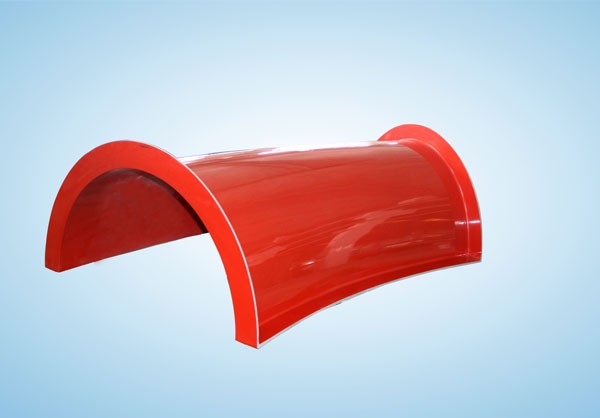
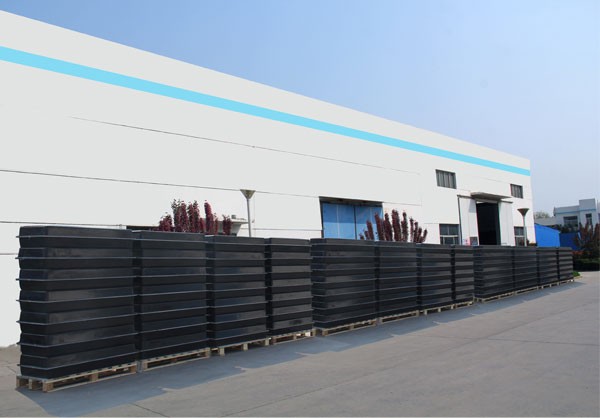
Shuangyi Technology uses LRTM to manufacture customized composite components, including wind turbine nacelle cover components, off-highway vehicle parts, battery enclosure upper covers, and recreational water slides.
The process can be applied to components of different geometries and sizes, depending on the product design, mold configuration, and manufacturing requirements. It is particularly suitable for parts requiring good surface quality, controlled resin distribution, lightweight construction, and consistent production quality.
By selecting appropriate fiber reinforcement, resin systems, and structural designs, we can develop LRTM composite components to meet specific requirements for strength, weight, and corrosion resistance.
The LRTM process generally involves the following manufacturing steps:
1. Mold Preparation: The mold surfaces are cleaned and prepared, and a release agent is applied. Gelcoat may be applied when a specific surface finish or color is required.
2. Fiber Reinforcement Placement: Dry fiber reinforcement is placed into the mold according to the product design and reinforcement requirements.
3. Mold Closing: The matched mold is closed and sealed to create a controlled molding cavity.
4. Resin Injection: Resin is introduced into the mold under controlled injection conditions, typically with vacuum assistance, to impregnate the fiber reinforcement.
5. Curing: The composite part is allowed to cure under the specified process conditions.
6. Demolding and Finishing: After curing, the component is removed from the mold and undergoes trimming, finishing, and dimensional inspection.
LRTM Manufacturing Capabilities
Shuangyi Technology has a team of more than 200 R&D and technical professionals, supported by approximately 2,000 production personnel. Our teams have extensive experience in composite product design, engineering development, tooling, and manufacturing.
We have developed and delivered customized composite components in volume for off-highway vehicle applications, including projects associated with leading manufacturers such as Caterpillar and Volvo.
Our integrated engineering and manufacturing capabilities enable us to support customers throughout the product development process, from engineering design and prototyping to pilot production and series manufacturing.
When Is LRTM Suitable?
LRTM is suitable for customized composite components that require good surface quality, controlled resin distribution, and consistent product performance.
Typical applications include:
· Wind turbine nacelle cover components
· Off-highway vehicle interior and exterior components
· Recreational water slides
· Customized composite housings and structural parts
LRTM is particularly attractive when manufacturers want to move from open-mold hand lay-up to a closed-mold process with improved process control, reduced emissions, and more consistent product quality.
The suitability of LRTM depends on component geometry, tooling investment, material requirements, production volume, and target manufacturing cost.
From Design to Production
Our engineering team begins each project by gaining a clear understanding of the customer's technical requirements, application conditions, and production objectives. Based on these requirements, we develop and review the product drawings and engineering design, while working closely with the customer to confirm key specifications and details.
The project then moves into first-article production, where the initial part is manufactured and evaluated against the agreed requirements. This stage provides an opportunity to verify the design, manufacturing process, dimensions, and overall product performance before proceeding further.
Once the first article is approved, we move to pilot production, producing a small batch of parts for further validation. Adjustments and refinements can be made during both the first-article and pilot-production stages based on customer feedback and actual production results.
After the product and process have been fully reviewed and approved, the project proceeds to full-scale production. This structured approach helps ensure that the final product meets the customer's requirements before entering volume manufacturing.
This process allows customers to validate product design and manufacturing feasibility before committing to full-scale production.
Related Products
https://www.shuangyitec.com/?list_18/55.html
https://www.shuangyitec.com/?list_19/107.html
https://www.shuangyitec.com/?list_19/106.html
Choosing the Right Composite Manufacturing Process
The appropriate composite manufacturing process depends on component geometry, size, structural requirements, production volume, material system, tooling requirements, and target cost. Shuangyi Technology can evaluate these factors and recommend a suitable manufacturing process during the engineering development stage.
Quality Assurance&Testing
Shuangyi Technology has dedicated quality assurance and inspection teams in addition to its professional engineering, R&D, and manufacturing teams. Our quality control process begins with the inspection of incoming raw materials, with key material properties and parameters, including glass transition temperature (Tg), verified according to applicable specifications and quality requirements.
For tooling and composite products, we use professional inspection and measurement equipment, including laser trackers, to accurately verify mold surfaces, dimensional accuracy, and critical geometric features.
Our quality organization includes approximately 100 dedicated quality professionals, with several team members holding professional APQP4Wind qualifications. Our quality engineers are experienced in applying internationally recognized quality management methodologies, including APQP, PDCA, and 8D problem-solving.
By applying structured quality processes and industry-recognized quality management methods throughout the product lifecycle, Shuangyi Technology maintains a consistent quality language and technical communication framework with global customers, supporting efficient collaboration from product development through manufacturing and final inspection.
1. What is LRTM in composite manufacturing?
LRTM (Light Resin Transfer Molding) is a closed-mold composite manufacturing process that uses controlled resin injection, typically with vacuum assistance, to impregnate fiber reinforcement inside a matched mold.
2. What types of products can be manufactured using LRTM?
LRTM can be used to manufacture composite components such as wind turbine nacelle cover parts, off-highway vehicle components, battery enclosure upper covers, recreational water slides, and other customized composite shells.
3. What are the main advantages of the LRTM process?
LRTM offers improved resin distribution control, better surface quality, reduced emissions compared with open-mold hand lay-up, and more consistent manufacturing results.
4. What is the difference between LRTM and VARI?
LRTM uses matched rigid molds to form a closed cavity, with resin introduced under controlled injection conditions, typically with vacuum assistance. VARI (Vacuum-Assisted Resin Infusion) generally uses a single-sided rigid mold and a vacuum bag to draw resin through dry fiber reinforcement. LRTM is often selected for applications requiring controlled two-sided surface quality and repeatable molding, while VARI is commonly used for large composite structures where flexible tooling and lower tooling investment are important. The appropriate process depends on component geometry, performance requirements, production volume, and target cost.
5. Can Shuangyi provide LRTM tooling and composite parts together?
Yes. Shuangyi Technology can support customized composite projects through engineering design, tooling development, process evaluation, prototyping, product validation, and series manufacturing.
6. Can Shuangyi support custom LRTM product development from drawings or concepts?
Yes. Our engineering team can review customer drawings or initial concepts, evaluate product requirements, provide design and manufacturing recommendations, and support development from first-article production through pilot runs and mass production.
Talk to Our Engineers
Our professional engineers have extensive experience managing composite development projects and leading engineering teams. If you have a custom composite design, engineering, or product development project, our experienced engineering team is ready to work with you to understand your requirements and develop the right solution.
Contact our engineering team:
export@shuangyitec.com