

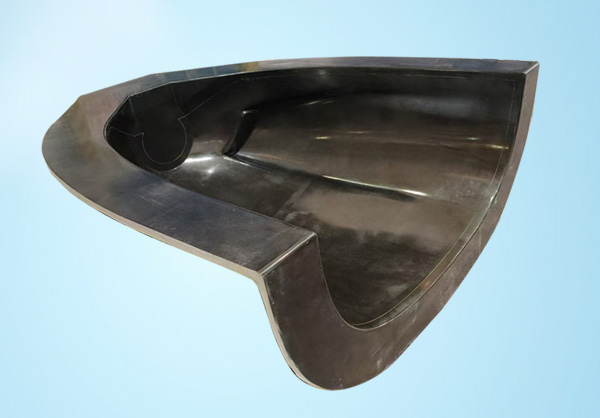
Non-Metallic Composite Molds
Drone Engine Cover Mold:
This type of mold weighs only 1/4 to 1/5 of equivalent steel molds while maintaining structural strength comparable to or exceeding some metal variants,
significantly enhancing portability and operational efficiency.
The mold cavity can be polished to a high-gloss finish with ease, minimizing post-processing requirements and enabling direct production of surfaces with superior quality.
Designed for a standard operating temperature range of -40°C to 160°C, it ensures consistent performance to meet the demands of most drone composite material components.
The High-Precision Carbon Fiber UAV Engine Cowl Mold is a customized composite tooling solution developed for manufacturing carbon fiber composite engine cowl components for small unmanned aerial vehicles (UAVs) and other low-altitude aircraft.
The mold features a composite reinforcement structure consisting of carbon felt and glass-fiber-reinforced epoxy resin. Vacuum-assisted resin infusion (VARI) is used to manufacture the composite mold structure, followed by CNC machining to achieve the required mold geometry and surface accuracy.
Key Technical Specifications
· Mold Material: Carbon felt and glass-fiber-reinforced epoxy resin
· Mold Manufacturing Process: Vacuum-assisted resin infusion (VARI) followed by CNC machining
· Overall Dimensions: 0.8 × 0.8 × 0.8 m
· Mold Surface Tolerance: ±0.5 mm
· Maximum Service Temperature: 140°C
Shuangyi Technology develops customized molds according to customer drawings and technical specifications. Material selection, mold structure, and manufacturing parameters are evaluated based on the intended application and operating conditions. First-article trials are conducted to verify the mold's suitability before subsequent production.
This customized composite mold is designed for manufacturing carbon fiber composite engine cowl components for small UAVs and other low-altitude aircraft.
The mold uses a reinforcement structure made of carbon felt and glass-fiber-reinforced epoxy resin, providing the structural strength and thermal resistance required for composite tooling applications.
Its precision-machined mold surface is designed to meet the specified geometric and dimensional requirements of the engine cowl component. With a specified mold surface tolerance of ±0.5 mm and a maximum service temperature of 140°C, the tooling is developed to support consistent component geometry and repeatable manufacturing.
Key features include:
· Customized Composite Structure: Carbon felt and glass-fiber-reinforced epoxy resin reinforcement tailored to the mold's structural requirements.
· Precision Mold Surface: CNC machining to achieve the specified mold geometry and surface accuracy.
· Thermal Performance: Designed for a maximum service temperature of 140°C.
· Application-Specific Design: Mold structure and manufacturing parameters developed according to the customer's engine cowl design and production requirements.
The manufacturing process is developed according to the mold geometry, dimensional accuracy requirements, operating temperature, delivery schedule, and project cost targets.
For this UAV engine cowl mold, Shuangyi Technology uses vacuum-assisted resin infusion (VARI) to manufacture the composite mold structure, followed by curing and CNC precision machining.
The manufacturing workflow includes:
Engineering and Process Planning
Customer drawings and technical specifications are reviewed to evaluate mold geometry, structural requirements, material selection, reinforcement configuration, and manufacturing feasibility.
Composite Mold Fabrication
Carbon felt and glass-fiber-reinforced epoxy materials are arranged according to the specified reinforcement structure. Vacuum-assisted resin infusion is used to impregnate and consolidate the composite materials. Curing parameters and process conditions are controlled according to the selected material system.
CNC Machining and Precision Control
After composite fabrication and curing, CNC machining is performed to achieve the required mold geometry and surface accuracy. Critical mold surfaces and dimensions are checked against the agreed technical specifications.
Inspection and Verification
The finished mold undergoes dimensional and surface inspection using professional measurement equipment, including laser tracking systems where applicable. First-article trials and engineering evaluations are conducted to assess its suitability for manufacturing the intended UAV engine cowl components.
This integrated manufacturing approach helps ensure that the customized tooling meets the customer's dimensional, thermal, and manufacturing requirements.
Shuangyi Technology provides customized composite tooling solutions for UAV engine cowl components and other lightweight aircraft applications. Our capabilities cover engineering evaluation, mold design, composite tooling fabrication, CNC machining, dimensional inspection, and first-article verification.
Our manufacturing capabilities include:
· Customized Engineering Design: Developing mold structures based on customer drawings, 3D models, and technical specifications.
· Finite Element Analysis (FEA): Evaluating structural behavior, loading conditions, and potential design risks to support engineering optimization.
· Composite Material and Process Selection: Selecting suitable reinforcement materials, resin systems, layup configurations, and manufacturing parameters.
· Composite Tooling Fabrication: Manufacturing customized composite molds using VARI and other suitable composite manufacturing technologies according to project requirements.
· CNC Machining: Machining critical mold surfaces and dimensions according to project specifications.
· Quality Inspection: Using professional inspection equipment, including laser tracking systems where applicable, to verify critical dimensions and mold geometry.
From initial project evaluation and engineering development to tooling production and final inspection, Shuangyi Technology provides integrated manufacturing support for customized composite tooling projects.
This high-precision composite mold is designed for manufacturing customized carbon fiber composite engine cowl components for small UAVs and selected low-altitude aircraft platforms.
Potential applications include:
· Small Unmanned Aerial Vehicles (UAVs): Carbon fiber composite engine cowlings and external engine covers.
· Low-Altitude Aircraft: Customized composite engine enclosure components for lightweight aircraft platforms.
· Aerospace Composite Components: Precision-molded external covers and lightweight housings developed according to customer specifications.
Each mold is designed and manufactured according to the customer's component geometry, technical requirements, and intended production conditions.
Shuangyi Technology works with customers throughout the customized UAV composite tooling development process, from initial design evaluation and engineering analysis to mold manufacturing and prototype verification.
The typical development process includes:
1. Reviewing customer requirements, drawings, 3D models, and technical specifications.
2. Evaluating component structure, loading conditions, mold requirements, and manufacturing feasibility.
3. Providing engineering recommendations on mold structure, reinforcement materials, and manufacturing processes.
4. Developing the mold design and manufacturing the composite tooling.
5. Conducting dimensional inspection and first-article trials to verify the mold against agreed technical requirements.
6. Improving the design and manufacturing process before subsequent production preparation.
This approach helps align tooling design with component requirements, manufacturing feasibility, and the customer's production objectives.
Q1. Can Shuangyi manufacture customized UAV engine cowl molds according to customer drawings?
Yes. Shuangyi Technology develops customized composite engine cowl molds based on customer drawings, 3D models, dimensional specifications, and application requirements. Our engineering team can provide recommendations on mold structure, material selection, and manufacturing processes.
Q2. What materials are used to manufacture this UAV engine cowl mold?
This mold uses a composite reinforcement structure consisting of carbon felt and glass-fiber-reinforced epoxy resin. Material selection and reinforcement configurations are determined according to the mold's structural and operating requirements.
Q3. What manufacturing process is used for this composite mold?
This mold is manufactured using vacuum-assisted resin infusion (VARI), followed by curing and CNC precision machining. This process combines composite tooling fabrication with precision machining to achieve the specified mold geometry and surface accuracy.
Q4. What dimensional accuracy can Shuangyi achieve for this composite mold?
The specified mold surface tolerance for this project is ±0.5 mm. Critical mold surfaces and dimensions are inspected against the agreed technical specifications using professional measurement equipment.
Q5. What is the maximum service temperature of this UAV engine cowl mold?
This customized composite mold is designed for a maximum service temperature of 140°C. The material system and manufacturing parameters are selected according to the intended operating conditions.
Q6. Does Shuangyi support customized mold development from design to prototype verification?
Yes. Shuangyi supports the development process from drawing review and engineering evaluation to mold manufacturing, CNC machining, dimensional inspection, and first-article verification. Design and process improvements can be made before subsequent production preparation.
If you are looking for a customized carbon fiber UAV engine cowl mold or a composite tooling manufacturer, contact our engineering team to discuss your mold design, material requirements, dimensional tolerances, and manufacturing specifications.
Our engineering team can review your drawings and technical requirements and provide suitable mold design and manufacturing solutions.
Email: export@shuangyitec.com
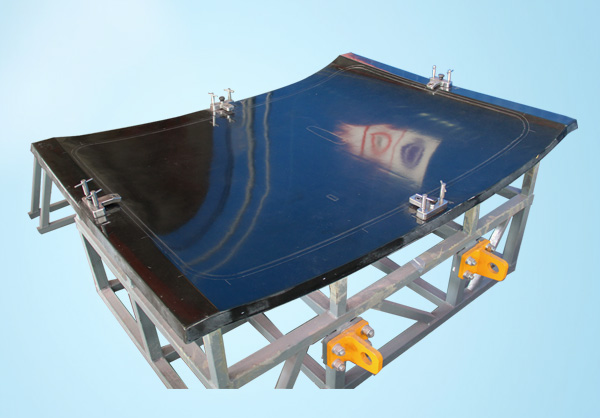
High-Precision UAV Component Mold
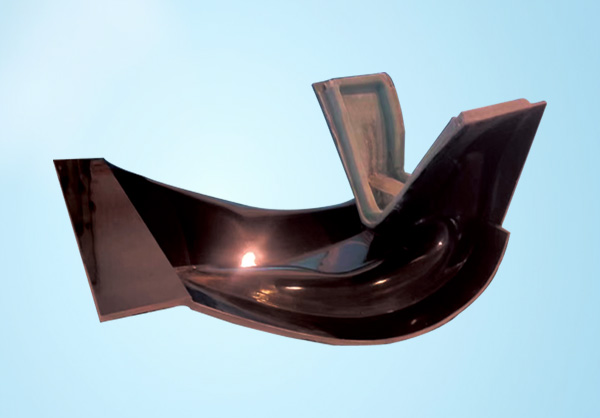
Drone Wing Mold
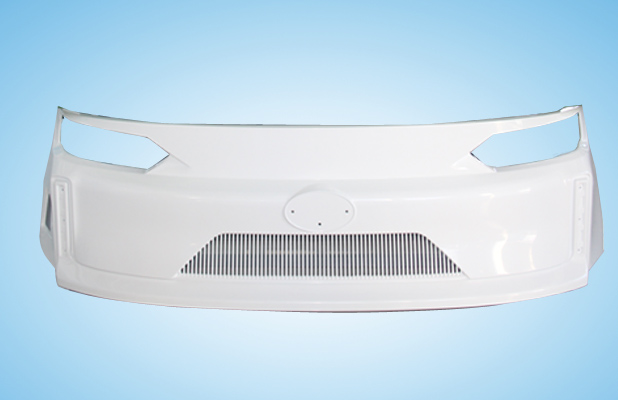
Front cover of construction vehicles
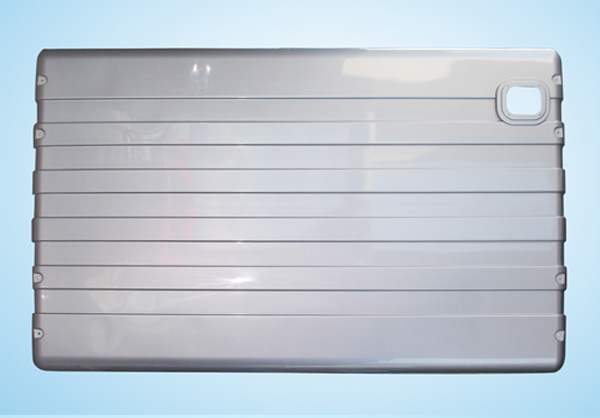
DCPD battery box upper shell
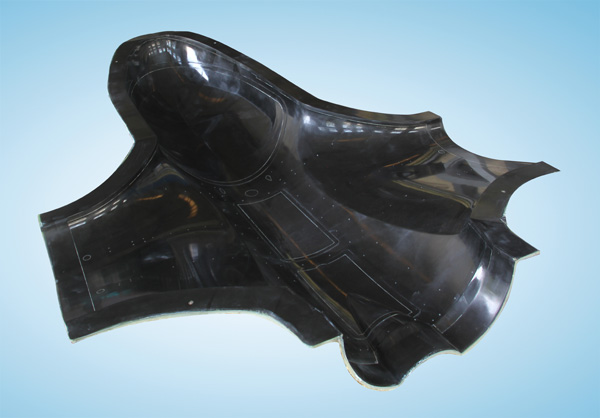
High-Precision UAV Fuselage Mold
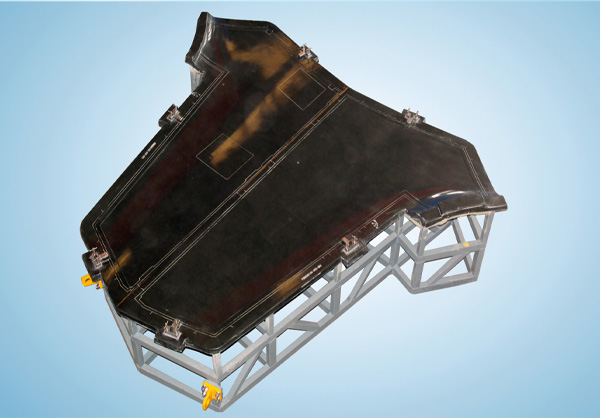
High-Precision UAV Tail Wing Mold
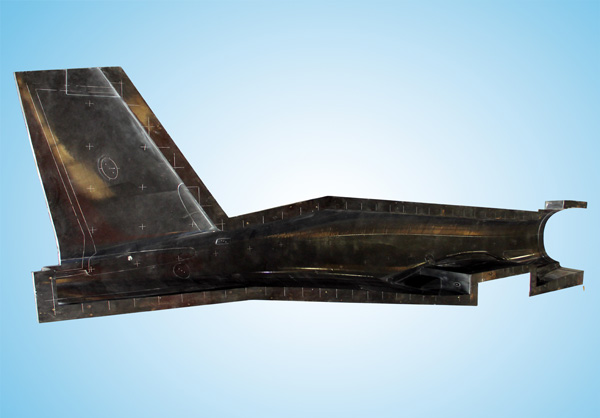
Drone body mold
Drone Engine Cover Mold
Leave A Review